project - M.S. Thesis
Reframed
A Quest 3 passthrough AR experience where classic artworks animate beyond their frames and become a treasure hunt.
- Role
- Solo Developer & Designer
- Team / Org
- Solo; thesis advised by Prof. Ming Lin and Dr. Beth Bonsignore
- Timeline
- Mar 2026 – Present
- Skills / Tools
- Passthrough AR
- Image tracking
- Pose estimation
- Playable experience
Overview
Developed independently during UMD’s New Works Incubator, Reframed recognizes printed artworks on a wall and anchors animated digital content to each one using on-device computer vision. A hidden-object search across five artworks turns it into a playable experience rather than a technical demo. It went from prototype to a public showcase and is the basis for my master’s thesis.
The experience
The augmentation begins with close registration between the digital and physical imagery. This creates visual continuity between the original artwork and its mixed-reality extension, helping the viewer perceive the effect as emerging from the painting itself.
The physical print remains present as the foundation of the experience while digital elements animate and begin to occupy additional depth. The original work is not replaced; it becomes part of the final mixed-reality composition.
In this sequence, elements from Wheat Field with Cypresses begin to separate from the two-dimensional composition and extend outward into the room. The frame becomes a threshold between the original image and a spatial version of the scene.
From the front, the physical and digital imagery can appear closely aligned. As the viewer moves sideways, parallax reveals the separation between virtual layers, making the three-dimensional construction of the scene visible through movement alone.
In the room
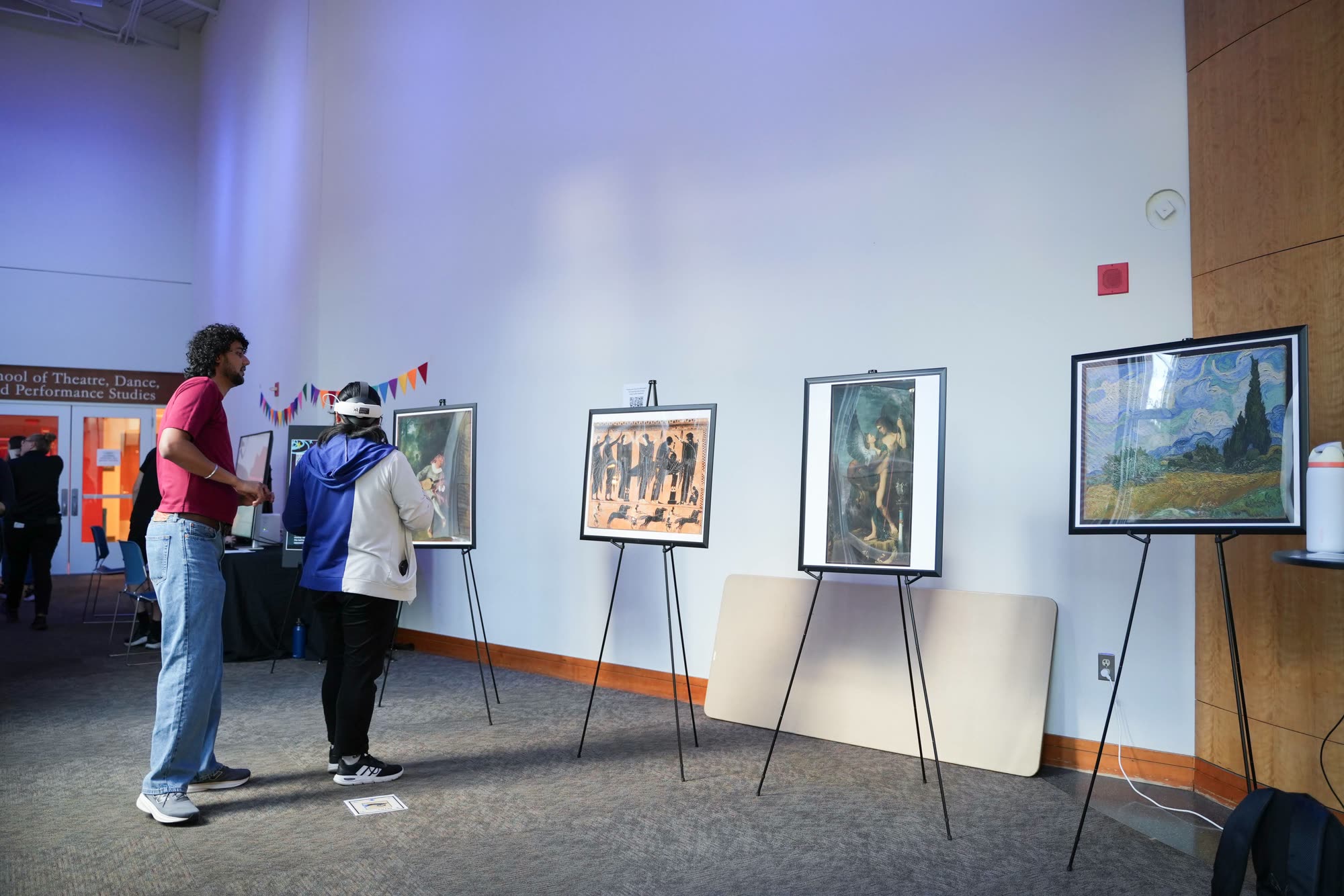
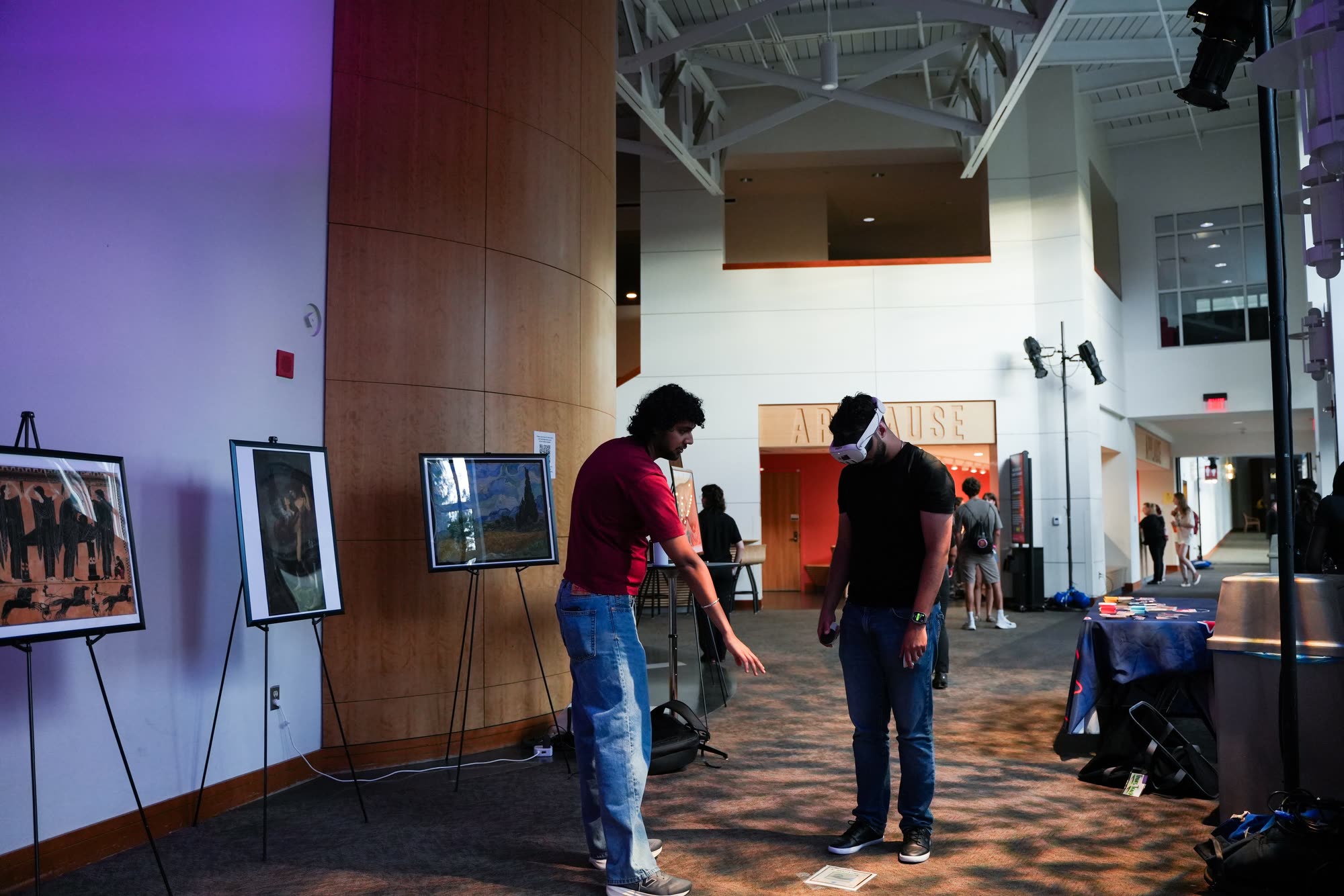
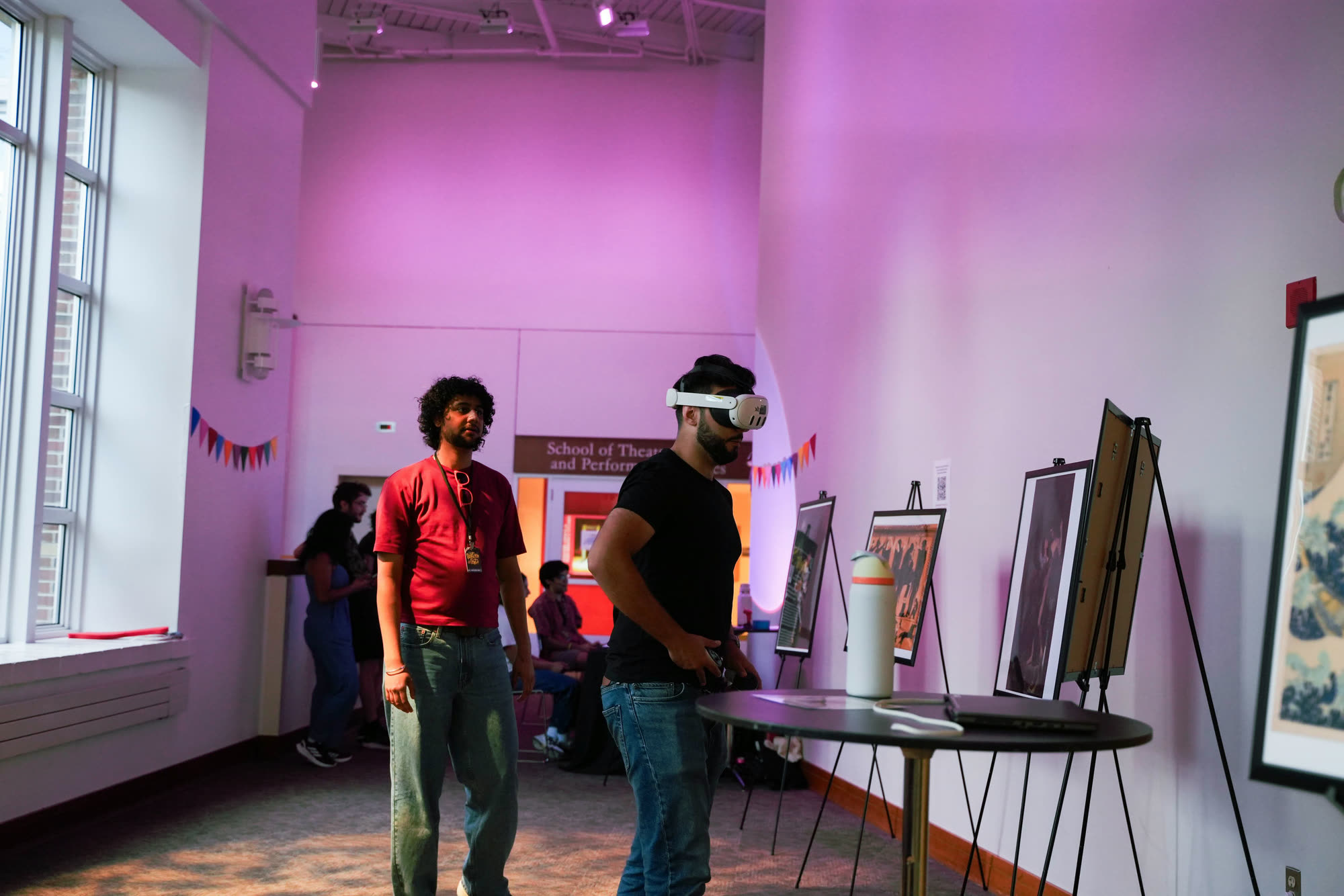
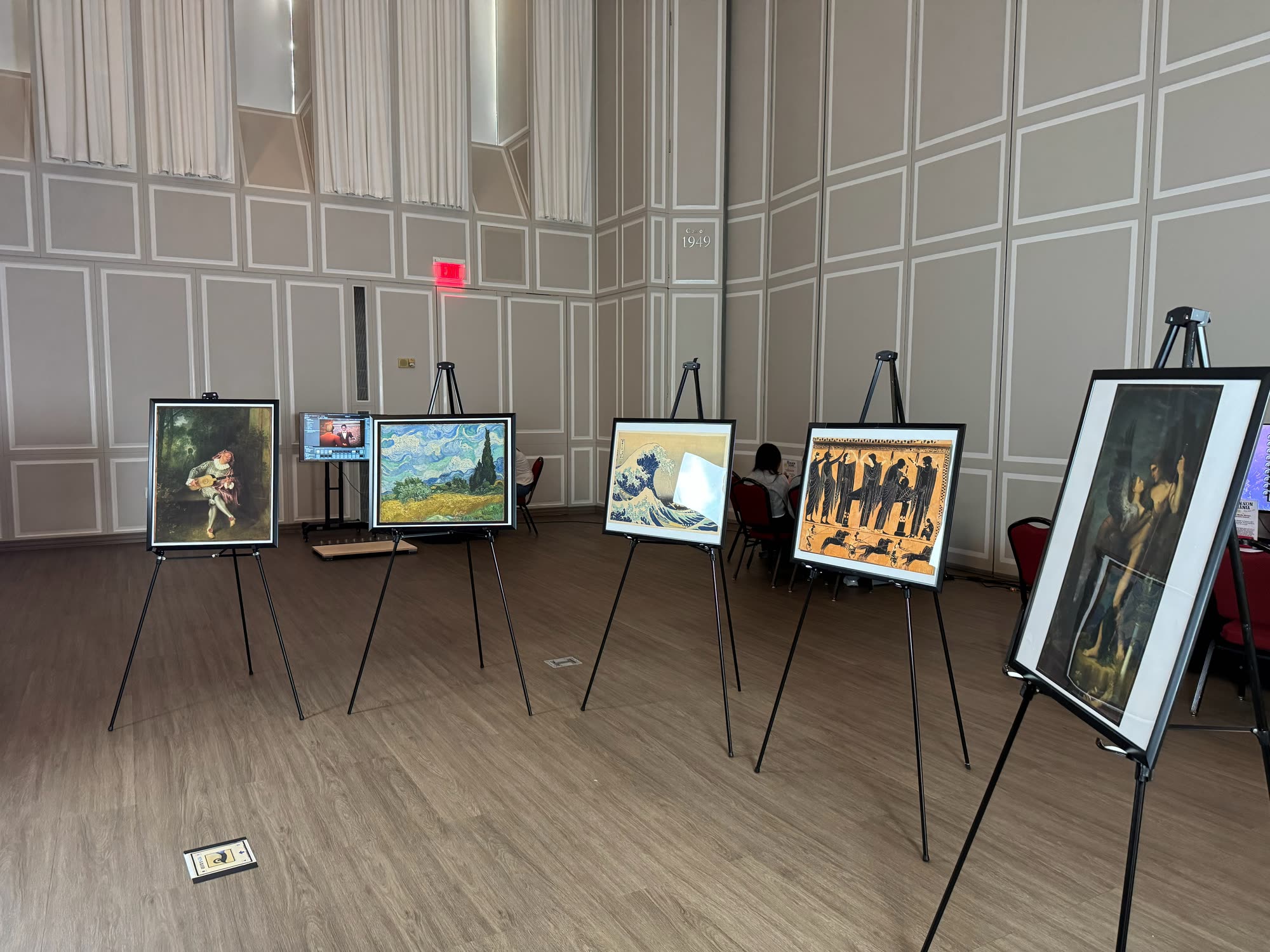
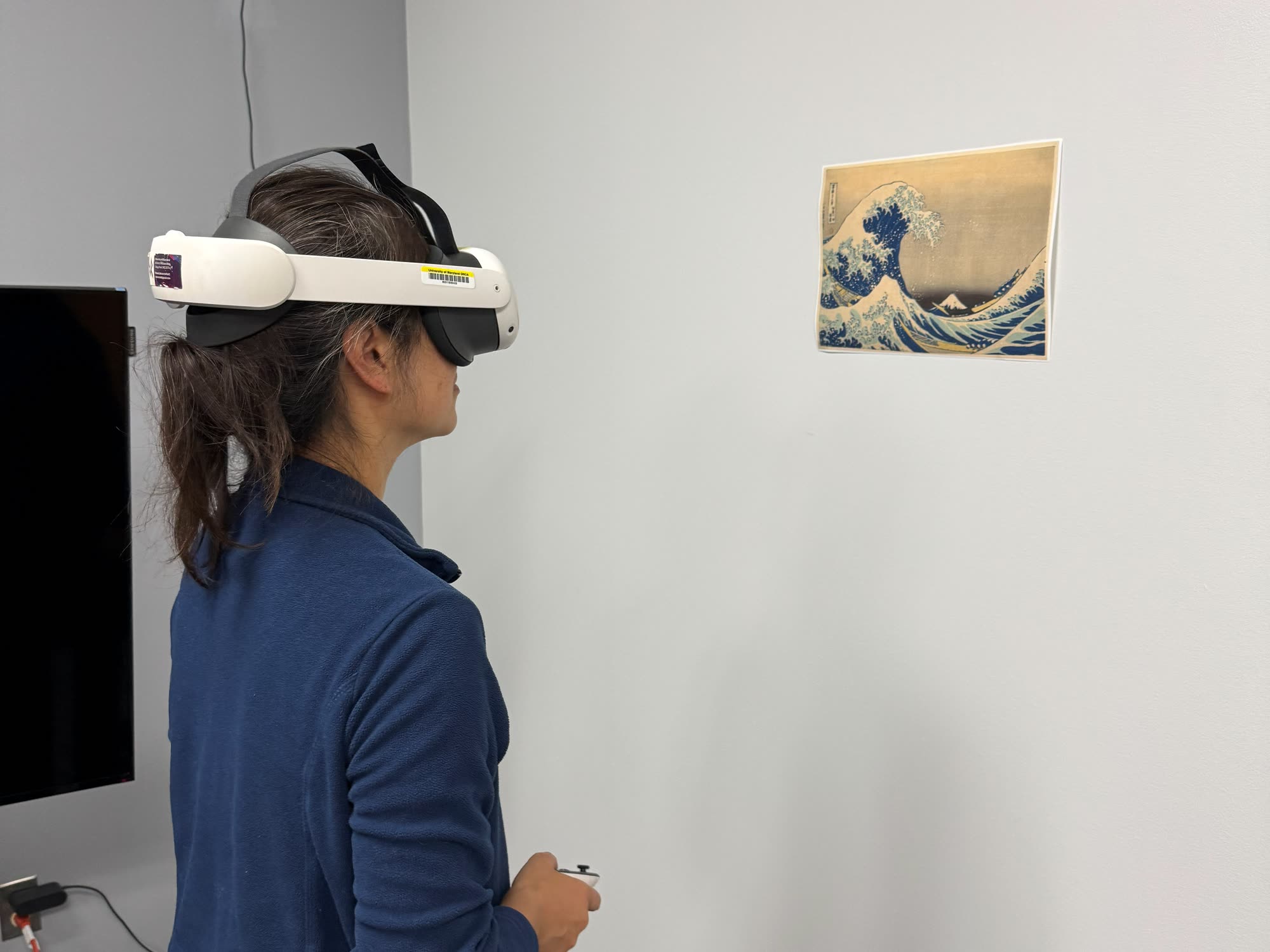
Reframed ran as a walk-up experience over two days and drew 50+ visitors. I hosted the station, getting each person into the headset and through their first artwork.
What I did
Built a Quest 3 passthrough AR system that recognizes physical printed artworks and anchors animated content to each one, using on-device ORB feature matching, homography, and 6-DoF solvePnP pose estimation.
Wove a hidden-object search across five registered artworks so the piece works as a playable experience, not just a technical demo.
Took it from prototype to a public showcase at UMD’s NextNOW Fest, drawing 50+ visitors over two days.
Basis for my master’s thesis, advised by Prof. Ming Lin (VR/spatial computing) and Dr. Beth Bonsignore (HCI).
Outcomes
- 50+
- Showcase visitors
- 5
- Registered artworks